Armour plates are specialized protective materials designed to withstand extreme forces, impacts, and ballistic threats. Unlike ordinary structural steel, they are engineered with high hardness, tensile strength, and impact resistance so that they can protect people, vehicles, and infrastructure in demanding environments.
These plates are crucial in military, defense, security, and high-risk civil applications ranging from armored vehicles and body armor to secure buildings and critical infrastructure.
Armour plates, also referred to as armour steel plates or ballistic plates, are materials that combine high hardness with tensile strength and toughness to protect against penetration and impact forces. They are typically produced through controlled metallurgical processes such as quenching and tempering, which refine the internal structure for optimal performance.
In ballistic applications, armour plates may be made from high-hardness steels or ceramic composites, depending on the protection level required.
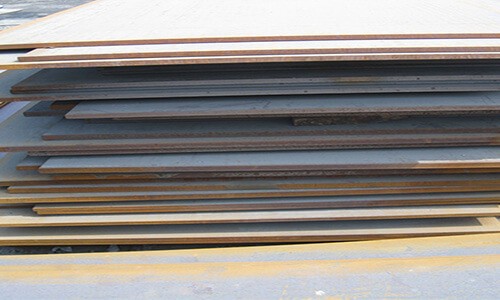
Key Characteristics of Armour Plates
Armour plates are defined by a combination of mechanical and physical properties far beyond those of normal steels:
High Hardness
Armour plates typically achieve Brinell hardness values of 400 BHN and above. Higher hardness enhances the plate’s resistance to deformation and penetration from projectiles or blast fragments.
Superior Strength and Toughness
These plates are engineered to withstand high stresses without cracking or breaking, even under multi-hit scenarios or explosive impact.
Impact and Ballistic Resistance
Armour plate systems are designed to absorb and dissipate energy from ballistic threats, shrapnel, and blunt impacts. Depending on grade and thickness, they can meet international standards such as NIJ Level III/IV, MIL-DTL-46100/12560, STANAG 4569, or EN 1522.
Manufacturing Standards
Typical armor steel specifications include:
-
MIL-A 12560 — Rolled homogeneous armor plate
-
MIL-A 46100 — High-hardness armor plate
-
Various proprietary grades like Miilux Protection 380/400/450/500 with corresponding hardness values.
-
Materials Used in Armour Plates
There are broadly two categories of armour plate materials:
Steel Armour Plates
Steel armour plates are typically high-hardness alloy steels with controlled carbon and alloy elements that improve hardness and strength. These steels may achieve hardness from about 320 BHN to beyond 600 BHN depending on the grade and heat treatment.
Common armour steel grades include:
-
Armor 400 / Armor 500 — High hardness (≈360–560 BHN) steels
-
MIL-A 46100 — A recognized military standard for high-hardness armor steel
-
Miilux Protection series — Commercial grades with defined hardness ranges (380–500+)
Steel armour plates are popular because they offer excellent multi-hit resistance and structural strength in thick plate forms.
Ceramic Armour Plates
Ceramic armour plates utilize materials such as alumina, silicon carbide, or boron carbide. These ceramics are lighter than steel and highly effective at stopping high-velocity, armor-piercing projectiles by shattering or deforming the incoming round and dissipating energy.
Ceramics are often combined with steel or composite backings to improve toughness and reduce spalling.
How Armour Plates Are Used
Armour plates are engineered to provide protection in diverse, high-risk environments:
Military & Defence Applications
Used extensively for:
-
Armored vehicles and troop carriers
-
Combat tanks and MRAPs (Mine-Resistant Ambush Protected vehicles)
-
Vehicle hulls, floors, and side protection
-
Tactical shelters and protective structures
They may be tested to standards like STANAG 4569 for vehicle ballistic protection.
Ballistic Body Armor
Plates certified under NIJ Level III or IV standards are used in body armor vests to stop rifle rounds and armor-piercing ammunition, especially for police, military, and security personnel.
Security & Civil Protection
Armour plates are integrated into:
-
Bank vault doors
-
Secure infrastructure (embassies, VIP convoys)
-
Border posts and checkpoints
These installations often need certified ballistic resistance under EN or NATO standards.
Armoured Vehicles & Civilian Protection
For ballistic and blast protection in:
-
Cash-in-transit vans
-
Police patrol vehicles
-
Diplomatic vehicles
Armour steel plates provide structural protection while maintaining mobility. -
Typical Plate Thickness and Formats
Armour plates are supplied in thicknesses tailored to protection needs and threat levels:
-
3 mm to 40 mm for medium protection applications
-
Up to ~80 mm or more for heavy ballistic and blast environments
-
Large sheet formats up to ~6100 × 2500 mm for armor fabrication.
Grades with higher hardness (500+ BHN) deliver superior ballistic resistance but may be heavier and less formable than lower grades.
Choosing the Right Armour Plate
Selecting the right armour plate depends on:
✔ Threat level and ballistic standard required (NIJ, STANAG, MIL, EN)
✔ Expected impact energies and projectile types
✔ Weight and mobility constraints (especially for personal armor)
✔ Weldability and fabrication needs for vehicle or structural protection
Steel armour plates are excellent for vehicle and structural defense, while ceramic plates are preferred where weight savings and higher ballistic performance are critical.
Conclusion
Armour plates are among the most important protective materials in modern defense, security, and high-risk civil applications. With specially engineered hardness, strength, and impact resistance, they serve as the first line of defense against ballistic threats, explosive forces, and high-energy impacts. Their applications span military vehicles, body armor systems, secure infrastructure, and armored transport — making them indispensable where protection matters most.